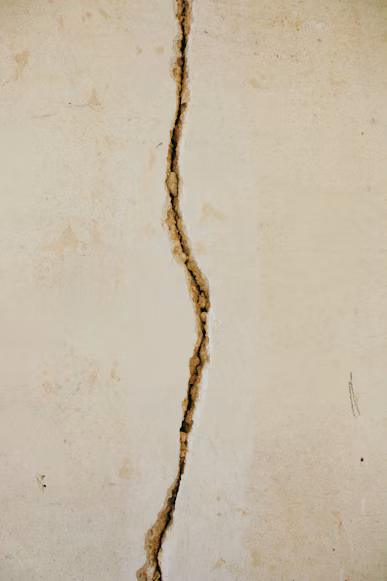
Short answer: Usually not. Standard policies exclude earth movement, which includes most sinkholes and gradual settling. Some states, notably Florida, require insurers to offer sinkhole coverage, and many policies cover catastrophic ground cover collapse, which has specific conditions. Check for a sinkhole endorsement and report cracks or depressions quickly.
A surface depression does not answer the insurance question
“Sinkhole” is often used for any hole, dip, or settling in a yard. The Florida Geological Survey explains that depressions and subsidence can have other causes, including broken drains or sewer pipes, poorly compacted soil after excavation, decomposing material, or compressible soil layers. Even a crack in a wall does not identify the cause. A qualified geologist or engineer may need to evaluate the site and the structure; a photograph or a general home inspection cannot reliably determine geological activity on its own.
Insurance adds a second question: even if a sinkhole caused the movement, does the policy cover that cause and this type of damage? A standard-form homeowners sample published by Maine’s Bureau of Insurance defines “earth movement” to include subsidence and sinkhole. The California Department of Insurance also describes sinkhole and earth movement as common homeowners exclusions. These sources show why a policyholder should not assume the peril is included; they do not prove that every insurer or state uses identical wording.
Florida has a specific legal framework, but it should not be generalized nationwide. The Florida Department of Financial Services distinguishes optional sinkhole coverage from catastrophic ground cover collapse coverage. Other states can have different statutes, endorsements, and policy forms. If you live outside Florida, check your state’s insurance department and the exact form issued for your home rather than borrowing Florida’s definitions or assuming that another state’s rules are the same.
What a homeowners policy may exclude or add
Many homeowners forms exclude loss caused by earth movement, which may include sinking, rising, shifting, landslide, or sinkhole. The exact definition matters, as do exceptions for a resulting fire or explosion. An endorsement may change the treatment of certain ground movement or sinkhole damage, but its scope, deductible, required structural damage, inspection terms, and repair process can be specific. A general home policy summary may not show each of these details.
| Question | Where to look | What to confirm |
|---|---|---|
| Is sinkhole or subsidence listed as an exclusion? | Policy form, earth movement exclusion | Exact wording and any exception for a resulting covered loss |
| Is there a separate sinkhole endorsement? | Endorsements and declarations | Whether it was issued, the covered property, limit, and deductible |
| Does the policy cover only catastrophic collapse? | Form and state-specific documents | The definition and evidence required in your jurisdiction |
| Are testing or engineering expenses addressed? | Endorsement and claim conditions | Who selects the professional and which costs are covered |
| Does another cause explain the damage? | Inspection, plumbing, engineering, and site records | Whether the evidence supports sinkhole, settlement, leakage, or another cause |
Do not rely only on the declarations page. It is a useful index of limits and endorsements, but the policy form contains definitions, exclusions, conditions, and duties after a loss. If you do not have the complete contract, request the form and all endorsements for the policy period in question. Ask the insurer to identify the exact section it is applying to the damage you reported.
Florida’s two terms are not interchangeable
The Florida Department of Financial Services says Florida policies include catastrophic ground cover collapse coverage, while sinkhole coverage is a separate option that can be purchased for an additional premium. Its consumer explanation lists four conditions for catastrophic ground cover collapse: an abrupt collapse of the ground, a clearly visible depression, structural damage to the insured building including its foundation, and a government agency’s order condemning the structure and requiring it to be vacated. All four are part of that Florida definition.
Optional sinkhole coverage may address structural damage caused by settlement or weakening of the ground even when the catastrophic-collapse criteria are not all met. That does not mean every crack qualifies. The Florida DFS page notes that structural damage and the applicable policy terms matter, and the state’s geological and engineering investigation process may be central to the claim. A visible crack, tile displacement, or sloping floor can be a reason to ask questions, but does not by itself prove insured sinkhole activity.
Before relying on the Florida distinction, locate the actual endorsement and declarations for your address and policy period. Confirm which coverage you purchased, what deductible applies, whether an inspection was required, which structures are included, and what the policy says about testing and repair. If the insurer’s records appear inconsistent with your documents, send a copy and ask for a written explanation. Florida’s definitions do not automatically apply to a home in another state.
Structural cracks have more than one possible cause
A foundation crack may result from soil movement, water pressure, a plumbing leak, age, construction details, or another condition. A roofline that appears uneven or a door that sticks can have multiple explanations too. The Florida DEP cautions that a yard depression may be a subsidence incident without being a professionally verified sinkhole. Its guidance says that when settling affects a dwelling, evaluation by a licensed engineering firm with a professional geologist on staff or a professional geology firm may be appropriate.
Do not diagnose the cause from one symptom or drill, dig, or enter an unstable area. If the structure is sinking, walls are cracking, or the ground is actively changing, keep people away and follow local emergency instructions. A qualified professional can assess safety and possible causes. The insurer may also arrange geological or engineering testing under the policy or endorsement. Keep the insurer’s reports and ask for copies of findings that support its coverage decision.
For a claim record, note when you first saw each change, where it appeared, whether it is growing, and any recent plumbing work, excavation, heavy rainfall, or nearby construction you know about. Keep dated photos from the same viewpoint with a ruler or another reference only if it is safe. Do not mark a live crack by pressing on it or remove material to inspect underneath. A timeline and professional report are more useful than a confident guess.
What the claim investigation may involve
An insurer may need to determine both the cause and the extent of structural damage. Depending on the policy and the state, the investigation can involve a site visit, engineering evaluation, geological testing, plumbing inspection, or review of construction records. The policy may specify who arranges testing, how evidence is shared, and whether the insurer must approve a repair plan. Ask before authorizing destructive testing or a major stabilization project, unless immediate safety requires action.
Testing can distinguish a sinkhole from a broken line, settlement, or another ground condition, but no single photograph or database entry proves what happened under one house. The Florida DEP notes that its database contains reported subsidence incidents, many of which have not been professionally field-checked. A map can offer context but is not a home-specific diagnosis, risk guarantee, or substitute for the insurer’s required evaluation.
Ask the adjuster to identify the cause the company believes is supported by the evidence, the policy wording it applies, which property is included, and what additional documentation it needs. If specialists disagree, request their written reports and ask how the disagreement can be reviewed. Do not discard test results, invoices, repair specifications, or photographs. If the policy describes a neutral evaluation or other dispute procedure, request the current instructions and deadlines for your state.
Protect people before collecting evidence
If a new hole or depression is near a structure, pool, driveway, or utility line, keep children, pets, and visitors away. Do not stand on an unstable edge or enter a damaged building to take pictures. Florida DEP advises marking and securing a suspected sinkhole, contacting the insurer when a dwelling is affected, and calling emergency services when life or property is in immediate danger. Follow your local officials’ instructions because the safe response depends on the actual conditions.
If officials tell you to leave, do so. Take essential belongings only if they can be removed safely. Contact the local building or emergency-management office and notify your insurer promptly. Save the claim number and the names of people you speak with. If a utility line may be exposed, contact the relevant utility or emergency service rather than approaching it yourself.
Avoid filling, pumping water into, or otherwise altering a suspected sinkhole before getting safe, location-specific guidance. Florida DEP explains that flowing water may enlarge a sinkhole and recommends keeping people away; the right response can depend on groundwater and permits. This guide is not a repair method. A geologist, engineer, insurer, or local authority may need to direct evaluation and stabilization. The priority is to prevent injury and avoid making the ground condition worse.
A hypothetical policy comparison
Imagine two homes with similar cracks across an interior wall. One policy includes only its standard form, which excludes sinkhole or earth movement; the other has a separately issued sinkhole endorsement. The owners may still receive different decisions depending on the cause, evidence of structural damage, covered property, deductible, exclusions, and required investigation. The presence of a crack alone does not decide either claim.
Now imagine that a sinkhole opens beside a home but the structure does not show damage. That fact is different from a collapse that affects the foundation and triggers a government order to vacate. In Florida, those distinctions matter to the catastrophic-ground-cover-collapse definition described by DFS. An optional sinkhole endorsement may have a different trigger and investigation process. Outside Florida, do not use those statutory criteria unless the applicable law and policy actually adopt them.
These examples are explanatory, not predictions. A real claim must be assessed against the contract and credible evidence. Keep separate records for structural repairs, personal property, temporary housing, engineering tests, and emergency work, because a policy may treat those expenses under different provisions. Ask the adjuster which receipts and approvals are needed for each part.
Buying or renewing a home in a sinkhole area
If you are buying a property where sinkhole activity is a concern, ask the insurer whether the property is eligible for the coverage you want and what endorsements are included. Florida DFS recommends asking about nearby sinkhole history, insurer requirements, and deductibles; its consumer guide also says an insurer may require testing before offering optional sinkhole coverage. The Florida DEP warns that reported subsidence data is not a verified list of all sinkholes. A listing map or seller statement cannot establish the condition under a specific structure.
Request copies of prior geological reports, stabilization and repair documents, permits, engineer certifications, and insurance records that are available to you. Have a qualified inspector or professional evaluate visible damage and explain the limits of that inspection. A general home inspection does not necessarily include geological testing. For a repaired site, ask what method was used, who certified the work, whether a warranty or follow-up inspection exists, and what the insurer needs to underwrite coverage.
Before renewing, check whether sinkhole coverage remains in force and whether the deductible or endorsement changed. Read notices carefully and ask the insurer to explain any removal or change in protection. If a home sale or disclosure question arises, requirements depend on the state’s real-estate law and the facts; get local legal or real-estate advice rather than treating an insurance guide as a disclosure rule.
Do not confuse a sinkhole with earthquake or water damage
Earthquake, flood, plumbing leakage, and sinkhole activity are separate causes even when they produce similar cracks or water. A homeowner may need a distinct earthquake policy, flood coverage, water-backup endorsement, or sinkhole endorsement depending on the loss and the state. A standard earthquake policy may not insure land stabilization; the California Department of Insurance notes this limitation in its consumer material. Do not assume that buying one separate policy covers every type of movement or water entering the home.
The first report should describe observations without choosing a technical cause: when the change appeared, where the water came from if known, whether a pipe failed, and which part of the structure moved. Notify the relevant insurer promptly and preserve inspection reports. If another cause is ruled out, retain the documentation showing why. Evidence from one policy may inform another investigation, but it does not automatically establish coverage under a separate contract.
For related background, see homeowners coverage, foundation repair and insurance, earthquake damage, and what to do after a denied claim. Those topics address different perils and processes; use the policy and state rules that apply to your own property.

Organize the next conversation with the insurer
Gather the declarations, policy form, endorsements, prior inspection reports, dated photographs, repair invoices, and any government notice. Ask: Is sinkhole coverage specifically listed? Which earth-movement wording applies? What evidence establishes the cause? Does the insurer require a particular professional or test? Is the property considered structurally damaged under this contract and state law? Which deductible, limit, and repair conditions apply? Request the answers and any denial reasons in writing.
If you disagree, use the internal review and complaint paths available in your state and observe policy deadlines. In Florida, the DFS consumer resources describe a neutral-evaluation process for certain sinkhole disputes. Confirm current eligibility and procedure with the state department; do not assume that a Florida process is available elsewhere. Consider qualified legal advice for a material coverage dispute.
The practical answer is conditional. Earth movement and sinkholes are commonly excluded in standard homeowners wording, and a separate endorsement or state law may change the result. Florida’s required catastrophic-collapse protection has a narrow definition distinct from optional sinkhole coverage. Establish safety, document facts, get qualified cause analysis, and ask the insurer to connect its decision to your issued policy.

Frequently asked questions
Does homeowners insurance cover a sinkhole?
Do not assume a standard policy covers it. A California Department of Insurance fact sheet describes sinkhole and earth movement exclusions in homeowners forms, while Florida has specific sinkhole and catastrophic-collapse rules. Your state, policy form, endorsements, cause, and structural damage determine the answer.
What is the difference between sinkhole coverage and catastrophic ground cover collapse in Florida?
Florida's Department of Financial Services explains that catastrophic ground cover collapse requires all four statutory conditions, including abrupt collapse, a visible depression, structural damage, and a government order to vacate. Separate sinkhole coverage may address other qualifying structural sinkhole damage, subject to policy terms.
Do foundation cracks prove that a sinkhole caused the damage?
No. Cracks and settling can have other causes, including plumbing problems, soil conditions, construction, or ordinary movement. Florida DEP recommends professional evaluation when a dwelling is affected; an insurance adjuster or photograph alone does not establish the geological cause.
What should I do if the ground suddenly sinks?
Keep people and pets away, mark or secure the hazard only if you can do so safely, and contact local emergency services if a structure or person is in immediate danger. Notify your insurer promptly and follow local authorities' instructions; do not enter an unstable area to inspect it.
Sources
- Homeowners Insurance Policy Endorsements — Florida Department of Financial Services
- Sinkhole FAQ — Florida Department of Environmental Protection
- Flood, Mudflow, Mudslide, Landslide, or Sinkhole Losses After a Wildfire — California Department of Insurance
- HO 00 03 05 11 - Homeowners 3 - Special Form — Maine Bureau of Insurance
CoverClaro explains insurance. We do not sell insurance or give personal advice. Your policy and insurer determine your coverage.