Short answer: Usually, no. Settling, shrinking soil, tree roots, and slow cracks are excluded as wear and tear or earth movement. Your policy may pay when a covered event damaged the foundation: a plumbing leak under the slab, a car hitting the house, fire, or a sudden collapse. Earthquake and flood damage need separate policies.
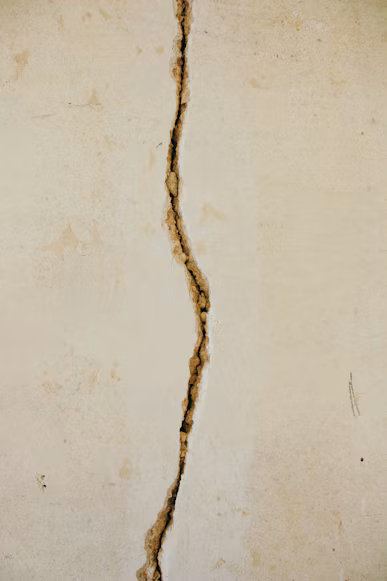
Does homeowners insurance cover foundation repair?
Often, it does not cover foundation repairs needed because the ground settled slowly, soil expanded or shrank, roots affected the structure, or cracks formed over time. Standard homeowners forms commonly exclude earth movement and wear and tear, and some insurers also treat long-running leakage as deterioration. But a foundation is not automatically outside coverage. A sudden plumbing leak under a slab, a vehicle striking the house, a fire, or a qualifying collapse may create a different policy question if the event is covered and no exclusion defeats it.
The cause matters more than the repair label. “Foundation repair” could mean stabilizing soil, replacing a broken water line, rebuilding a wall after impact, or addressing a collapse. Those jobs have different causes and may involve separate coverages. Our plain-English guide to homeowners insurance explains how an HO-3 policy treats covered causes and exclusions. For a leak beneath a concrete slab, see the burst-pipe guide as well.
Slow movement versus sudden damage
Small cracks, doors that stick, or uneven floors can develop gradually. Those clues deserve inspection, but they do not establish why the foundation moved. A structural professional may look at crack patterns, drainage, soil conditions, plumbing, and the building’s history. If a contractor simply says “foundation problem,” ask what physical evidence points to a cause and when that cause likely began. The insurance question is not settled by the name of the repair service.
The standard HO-3 specimen hosted by Maine’s insurance regulator excludes earth movement and wear and tear. The U.S. Government Accountability Office’s overview of common homeowners forms also describes earth movement and water exclusions. Neither source decides a specific policyholder’s case. A company may issue a different form or endorsement, and the exclusion’s wording and facts matter. A sudden event can be covered even if the foundation later needs extensive work; a dramatic crack can remain excluded if the underlying cause is gradual movement.
Tree roots are another example where a short answer can overstate certainty. Roots can affect soil and a slab over time, but a plumbing line near roots might also have failed suddenly. A tree hitting the house is a separate impact event. Save the arborist, plumber, or engineer’s observations and ask them to distinguish direct observations from conclusions. Do not assume that “tree-related” means the same coverage applies to a root, a fallen tree, and a branch impact.
When may sudden foundation damage be covered?
| Cause and example | Possible coverage question | Evidence to keep |
|---|---|---|
| A plumbing line suddenly leaks under the slab | Resulting damage and access may be considered if the loss is covered | Plumber’s leak location, photos, invoices, moisture records |
| A car strikes a foundation wall | Impact damage may be covered, subject to the policy | Incident report, dated photos, repair scope |
| Fire or explosion damages the structure | May fall under a covered cause, depending on exclusions | Fire department records, contractor findings, estimates |
| A slow crack follows soil movement | Earth movement or gradual-damage exclusions may apply | Engineer’s observations, crack timeline, drainage history |
| A structure abruptly collapses | HO-3 collapse wording may apply only under listed conditions | Cause analysis, safety report, policy form and endorsements |
The table is a map for questions, not a promise of payment. Under the standard HO-3 form, dwelling coverage is broader than the named-peril list for belongings, but it still excludes specified causes. A covered pipe leak may also raise the access question: some policies address tearing out and replacing building parts needed to reach a plumbing system. The pipe itself, the slab opening, and the later foundation repair may not all receive the same decision.
For impact, keep the date and circumstances of the collision and any available police or property report. For water, ask the plumber to mark the line’s location and describe the point of failure. For fire or explosion, keep the official incident information and the contractor’s scope. These materials help connect the repair to a cause. They do not replace the policy wording or guarantee that every resulting cost is insured.
What does “collapse” mean in an HO-3 policy?
The sample HO-3 form does not treat every crack, bulge, or unsafe-looking wall as a covered collapse. It defines collapse around an abrupt falling or caving in that makes a building or part of it unable to be occupied for its intended purpose. The form distinguishes that event from a structure that is merely in danger of falling or has separated, cracked, leaned, or settled while still standing. It also lists conditions and causes that can matter, such as hidden decay, hidden insect damage, weight of contents or people, and weight of rain on a roof.
Those details come from the May 2011 HO 00 03 05 11 specimen hosted by Maine’s regulator. Your policy may use a different edition or add an endorsement that changes the result. Do not call a crack a “collapse” in a claim without checking the definition. If a building appears unstable, leave the area and contact local emergency or building-safety officials. Personal safety comes first; coverage analysis can follow once the home is safe to inspect.
Earthquake, flood, and water backup
Earth movement such as an earthquake is commonly excluded by a standard homeowners form. Flood is usually a separate policy question, and the HO-3 specimen excludes certain surface water, overflow, and groundwater loss. Water that backs up through a drain or sewer can be addressed through a specific endorsement, if the homeowner purchased one. The source may matter more than whether water is visible around the foundation after the event.
If water entered the home, document its path and ask whether the cause was plumbing, outside flooding, groundwater, or a sewer backup. Those categories can trigger different contracts and limits. Do not assume an ordinary pipe-break claim covers water that came through the ground. If the event may be flood-related, ask the flood insurer about its notice and documentation requirements as well as the homeowners insurer’s process.
What foundation repair may cost
This Old House reports a 2026 estimated average of $5,179 for foundation repair, with a common project range of $2,224 to $8,134. These are broad cost estimates attributed to Angi data on the page. A pier installation, crack repair, drainage correction, and work beneath a slab are different projects. Soil, access, home size, location, and contractor scope can shift the final invoice. The estimate is not an insurance settlement and does not show which part a policy would cover.
Ask for a written assessment that separates the diagnosis, plumbing work, structural stabilization, excavation, permit, and restoration. If one contractor recommends a large project, a second written opinion can help you understand whether the repair scope is limited to the affected area or includes preventative work. Keep both versions if the scope changes. If an insurer asks for estimates, share the same version with each party and label any later changes by date.
| Estimate | Published figure | Source |
|---|---|---|
| Foundation repair | $5,179 average; $2,224–$8,134 common project range in the 2026 page | This Old House / Angi data |
| Structural engineer report | No verified national price in the sources used for this guide | Request local written quotes |
| Slab leak access and repair | Varies by location and required opening | Keep the plumber’s itemized estimate |
No engineer-report price is included because we did not find a source that supports a current national figure. Get a local quote for an inspection that names the questions it will answer. A report should describe observations and limits, not promise that an insurer will pay.
The 80% replacement-cost guideline
The “80% rule” is shorthand for a condition found in some replacement-cost policies. A policy may require a home to be insured for a stated percentage of its rebuilding cost to avoid a reduced payment after a partial loss. The Maryland Insurance Administration guide discusses the 80% benchmark as a consumer planning point. It is not a universal law or a fixed rule in every contract. Read the loss settlement and coinsurance wording in the issued form, and ask how additions, labor, debris removal, and local construction costs are calculated.
For a simple illustration, suppose a home would cost $400,000 to rebuild. Eighty percent of that hypothetical rebuilding cost is $320,000. A policy limit of $300,000 sits below that benchmark. This does not tell us the payment on a real claim: the policy may use a formula, deductible, limits, depreciation, and other conditions. The example is about replacement cost, not what the home might sell for. Market price includes land and buyer demand; reconstruction estimates the labor and materials needed to rebuild the structure.
Check whether the dwelling limit reflects rebuilding rather than the purchase price or mortgage balance. Keep estimates after renovations and ask the insurer how it arrives at a recommended limit. If a foundation loss is covered, the amount available still depends on the policy’s limit, deductible, exclusions, and loss-settlement terms. A high repair estimate by itself does not raise Coverage A.

How to document a possible covered cause
Take dated photos of the crack or movement from the same angles over time, while staying out of unsafe areas. Photograph nearby plumbing, water staining, fallen trees, impact points, or fire damage if present. Save repair invoices, leak detection records, receipts, inspection notes, and any municipal safety notice. Ask a structural engineer or other qualified professional to explain what is observed, what cause is supported, and what cannot be determined. A report that only says “foundation failure” may not answer the insurance question. For the claim process itself, see our step-by-step guide to filing a homeowners claim.
Promptly tell the insurer when you suspect a covered sudden loss, following the policy’s notice terms. Ask whether it wants an inspection before permanent repairs and what temporary work is appropriate. Do not hide an earlier crack or present a gradual condition as sudden. A full and accurate timeline helps separate a new event from older movement. If the contractor needs to stabilize an unsafe area immediately, document why work could not wait and retain the removed materials or photos when practical.
The claim process is separate from the future premium question. If you are weighing a water or impact claim, read how a claim can affect renewal and use the claim calculator to compare labeled assumptions. The calculator does not decide coverage or replace the insurer’s estimate.
A foundation-loss record
- Photograph cracks and affected rooms with dates, without entering an unsafe area.
- Ask the plumber or engineer to describe the observed cause and what remains uncertain.
- Keep the policy, declarations, reports, estimates, invoices, and safety notices together.
- Ask the insurer what it needs to inspect before permanent repairs and how to document urgent work.
- Separate pipe access, stabilization, finishing, and preventative improvements in the written scope.
Can you live at home during repair?
The answer depends on the structural engineer’s assessment, the work plan, utility access, and instructions from local safety officials. Some repairs can be done while occupants remain in other parts of the home; other work may require temporary relocation. Do not make that call from a photo or insurance blog. Follow qualified safety instructions, and ask the contractor what areas must remain clear during the work.
Coverage D, often called loss of use or additional living expense, may help with certain extra costs when a covered loss makes the home unfit to live in, subject to the contract’s terms, limits, and documentation. It is not triggered just because a repair is inconvenient or because an excluded settling problem needs work. Ask the insurer what evidence it needs and which temporary costs are eligible before assuming hotel or meal expenses will be reimbursed.
Frequently asked questions
Frequently asked questions
How do I get insurance to pay for foundation repair?
Document a suspected sudden cause, dated photos, and plumber or contractor findings, then ask the insurer to compare them with the issued policy. Coverage depends on the event and exact terms.
Why are foundations not covered by insurance?
Gradual settling, earth movement, and wear are often excluded, and long-running leaks may be treated as deterioration. A sudden covered event can lead to a different result, so the cause matters.
What is the 80% rule in homeowners insurance?
Some replacement-cost policies use a coinsurance condition tied to a percentage of rebuilding cost. Maryland discusses 80% as a benchmark; the issued policy controls any penalty.
Can you live in a house during foundation repair?
It depends on a safety assessment, the repair plan, and utilities. Loss-of-use coverage may apply only when a covered loss makes the home uninhabitable under the contract.
Sources
- Homeowners 3 — Special Form, HO 00 03 05 11 — Maine Bureau of Insurance
- A Consumer Guide to Homeowners Insurance — Maryland Insurance Administration
- Homeowners Insurance, GAO-14-179 — U.S. Government Accountability Office
- Foundation Repair Cost (2026) — This Old House
CoverClaro explains insurance. We do not sell insurance or give personal advice. Your policy and insurer determine your coverage.