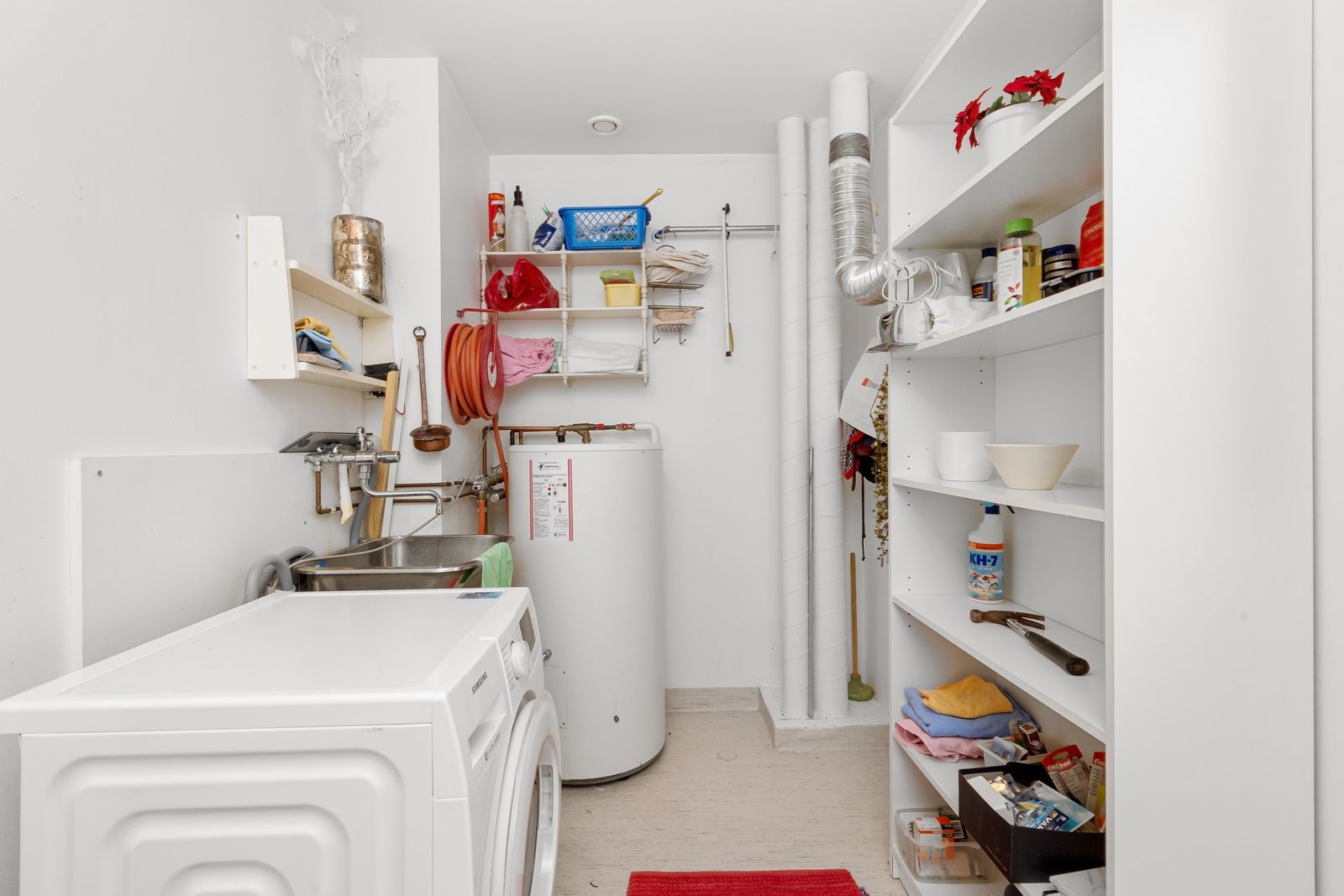
Short answer: Usually, yes, for the damage it causes. If your water heater suddenly bursts or leaks, a standard HO-3 policy pays to dry out and repair floors, walls, and belongings. It won’t pay for the water heater itself or for damage from a slow leak you could have spotted. Replacing an old tank is on you.
Does homeowners insurance cover a water heater leak?
Two different things get lumped together when a water heater fails: the heater and the mess it makes. Insurance treats them separately. The mess, meaning the soaked floor, the swollen baseboards, the ruined drywall, and the boxes of stuff sitting in the basement, is usually covered when the water came out suddenly. The heater is not. If the tank rusted through after twelve years, the tank is yours to replace.
That split follows the structure of a standard HO-3 policy, which we walk through in our plain-English guide to what homeowners insurance covers. Your dwelling is covered against sudden, accidental damage unless an exclusion applies. Wear and tear, deterioration, and mechanical breakdown are excluded. A water heater that simply wears out lands squarely in that exclusion, and a heater that floods your laundry room lands in the covered-damage side of the ledger.
The ISO HO-3 specimen form we use as a reference spells out the same logic for plumbing and appliances. It describes a covered “accidental discharge or overflow of water or steam” from a plumbing system or household appliance, and then draws the line right at the source:
We do not cover loss to the system or appliance from which this water or steam escaped.
This is a specimen from 2011 hosted by a state regulator. Your insurer may use a different edition, a proprietary form, or add endorsements. Pull your own policy and look for the same ideas under the water and plumbing sections. More cases like this one live in our water and plumbing guides.
What does the policy pay for after a water heater leak?
Kin Insurance and NerdWallet describe the same picture. A heater that was in good working order and suddenly bursts or leaks is the textbook covered case: the policy pays to drain the water, dry the area, and repair what got wet. NerdWallet adds that the policy will not pay to replace the appliance itself unless you have added equipment breakdown coverage.
Here is how the common situations usually sort out. “Usually” matters: the policy you hold decides.
| Situation | Possible outcome | Why |
|---|---|---|
| Tank splits and floods the utility room | Usually covered | Sudden, accidental water damage to floors, walls, and belongings is the core of the peril. |
| Cost to open a wall or floor to reach the heater | Usually covered | The specimen form includes tear-out and replacement of the building part needed to repair the system, but not the appliance. |
| The water heater itself | Usually not covered | The form excludes the appliance the water escaped from; wear and mechanical breakdown are excluded too. |
| Tank corroded and wept for months | Usually not covered | Gradual leakage and lack of maintenance are the most common reasons these claims are denied. |
| Heater simply stopped heating, no water damage | Not covered | Breakdown from age is a maintenance cost, not a loss. This is what a home warranty or an equipment breakdown add-on is for. |
| Leak you noticed and ignored | Depends | Policies expect you to take reasonable steps to protect the property. Waiting can turn a covered event into a partly denied one. |
How old is too old for a water heater claim?
There is no age cutoff in the standard form. Age matters for a different reason: it shapes how the adjuster reads the evidence. A ten-year-old tank that fails in the middle of the night is easy to see as a sudden event. A ten-year-old tank sitting in a puddle of rust-colored water with a crusted fitting looks like something that has been dripping for a long time.
How long do these units last? Openly says conventional tank heaters typically last 8 to 12 years and tankless models 15 to 20 years or longer with proper maintenance. HomeAdvisor gives wider ranges: tank-style units are expected to need replacement between 6 and 15 years, and tankless units can run 20 years or more. Those ranges overlap enough that you should read the date on the data plate of your own unit instead of guessing. If you do not know the age, find it. You will want it for a claim, for a plumber, and for deciding when to replace the tank before it fails.
Two things help here, and neither involves spin. First, keep service records. If a plumber flushed the tank, checked the pressure relief valve, or replaced an anode rod, that paperwork shows the unit was maintained. Openly lists failing to flush sediment, ignoring small leaks, and not replacing the anode rod as examples of maintenance gaps that can sink a claim. Second, when the adjuster asks how old the unit is, give the true answer. An old heater does not void coverage for the water damage. A wrong answer about it can create a much bigger problem than the age ever would.
What is different about a tankless water heater?
A tankless unit heats water on demand, so there is no storage tank holding dozens of gallons that can split and release everything at once. When a tankless system leaks, it is usually at a connection, a valve, or a pipe, and the water released tends to be a trickle rather than a flood. That changes the claim in two ways.
The water damage is often smaller, but it can be easier to miss, which is where the “sudden versus gradual” question gets harder. A slow leak at a fitting behind a closet door can run for weeks before anyone notices. Check the unit and the floor beneath it every few months and note the date, even if only in your phone.
The second difference is cost. Openly points out that tankless units cost more up front, and HomeAdvisor’s ranges reflect it: roughly $1,400 to $3,900 for tankless against $600 to $2,500 for tank-style. The insurance answer is the same either way. The policy pays for covered resulting damage and does not pay to replace the unit, unless the policy has an equipment breakdown endorsement that says otherwise.
Who pays for the new water heater?
Not your homeowners policy, in most cases. There are three other places to look.
The manufacturer’s warranty. If the unit is young and fails because of a defect, the manufacturer may owe you a replacement or a credit. Warranty terms vary a lot by brand and model, and many cover the tank and parts for a different number of years. Look up the model and serial number on the data plate and read the actual terms. Installation labor is often not included.
A home warranty. A home warranty is a service contract, not insurance. The Federal Trade Commission describes home warranties as service contracts that typically cover repairs and replacements for things like appliances or air conditioning systems, and it advises reading for limits on reimbursement, service fees, and exclusions. If you have one, call it in addition to your insurer, since the two cover different halves of the problem. Our comparison of home warranties and homeowners insurance explains where each one fits.
An equipment breakdown endorsement. Some insurers sell an add-on that covers mechanical failure of home equipment. NerdWallet mentions it as the path to getting the appliance itself covered. If it is on your declarations page, it may change the answer on the heater.
What should you do the moment you see water?
Speed matters because water spreads and because your policy expects you to limit further damage. The HO-3 specimen has an additional coverage for reasonable repairs: it says the insurer will pay the reasonable cost of necessary measures taken solely to protect covered property from further damage. It also requires you to keep an accurate record of repair expenses. Save every receipt.
What to do right now
- Stay out of standing water if the heater, outlets, or appliances might be live. Turn off power to the heater at the breaker panel if you can reach it dry. If you smell gas, leave the house and call your gas utility or 911 from outside.
- Close the cold-water supply valve to the heater. If you cannot find it or it will not close, shut off the main water valve to the house.
- Photograph or film the heater, the data plate with its age and model, the water, the floors and walls, and anything wet. Do this before you start mopping.
- Move belongings out of the water and keep damaged items for the adjuster. Write down what was damaged.
- Call a licensed plumber to stop the source and ask them to note in writing what failed and what they found around it.
- Call your insurer or agent and report the loss. Ask whether they want to inspect the heater or the failed part before it is thrown out, and ask about an approved drying company.
- Start drying promptly with fans, a dehumidifier, or a restoration company, and keep invoices. Wet drywall and insulation left in place can lead to mold, which has its own coverage limits. See our mold guide.
Our step-by-step guide to filing a homeowners claim covers the call, the adjuster visit, and the paperwork in more detail. If a pipe rather than the heater is the source, our guide to burst and frozen pipes walks through that case.
How much does a water heater leak cost to fix?
The heater is the part with a published price. The cleanup depends on how much water got where. We found no reliable national figure for water damage from a water heater specifically, so we are not going to make one up. Get at least one written estimate from a drying and restoration contractor, and ask what each line covers.
| Repair | Typical range | Source |
|---|---|---|
| Replace a water heater, national average | About $1,348 average; $882 to $1,826 typical range | HomeAdvisor |
| Tank-style unit, installed | $600 to $2,500 | HomeAdvisor |
| Tankless unit, installed | $1,400 to $3,900 | HomeAdvisor |
Those are figures from HomeAdvisor’s cost page as updated in June 2026. They are averages across the country and will not match a quote for your house.
Should you file a claim for a water heater leak?
Run the math before you call. Here is a made-up example, labeled as illustrative: the tank splits, and a restoration contractor estimates $6,000 to dry the basement and replace flooring and drywall. Your deductible is $1,000. If the claim is covered, the policy would pay about $5,000. The replacement heater, around the $1,348 HomeAdvisor average, is separate and comes out of your pocket either way.
Now change the numbers. If the leak ruined a section of vinyl flooring and the estimate is $1,400 against a $1,000 deductible, the policy would pay $400 and you might be giving up a claims-free record for it. That is the situation where a quick claim calculator comparison earns its keep. NerdWallet reports that about 1 in 60 insured homes has a claim for water or freezing damage each year, so water claims are common, but your premium consequences depend on your insurer and your state. Our guide to whether your premium goes up after a claim has the numbers, including what some states restrict.
You can ask questions about coverage before you decide to file. Say what you are doing: “I’m asking whether this is covered, I haven’t decided to file.” Then write down the date, the person, and what they said.
How do you prevent the next leak?
Most advice from insurers and plumbers boils down to maintenance you can do in an afternoon. Kin recommends annual inspections, checking the pressure relief valve, installing a drain pan under the heater, and knowing where your main water shutoff is. Openly adds flushing sediment and replacing the anode rod where the model has one.
Add three more habits. Look at the heater whenever you walk past it and note rust, damp insulation, or drips at the fittings. Consider a water-leak sensor beside the heater that sends an alert to your phone, since the worst losses are the ones nobody sees for a week. And plan the replacement before the unit is old enough that a failure is likely. A planned replacement on your schedule beats a surprise at 3 a.m.
Two real scenarios
The overnight burst. A homeowner wakes up to the sound of running water in the garage. The 11-year-old tank has split along a seam. She shuts the cold-water valve, kills the breaker, takes photos, and calls her insurer the same morning. The plumber’s invoice says the tank failed at the seam. The adjuster approves the flooring, drywall, and drying costs minus her deductible and does not pay for the heater. She buys a new one for the average price and keeps the receipt.
The slow weep. Another homeowner notices a rust stain on the closet floor and plans to deal with it later. Four months later the base of the wall is soft and moldy. The adjuster finds long-term seepage and rust at the fitting. The claim may be denied or limited as gradual damage. The lesson is not to hide the stain or to say it appeared yesterday. The lesson is to act when you first see it, to photograph it with a date, and to describe exactly what you saw and when. If a leak was truly sudden, the facts will show it. If it was not, the facts will show that too.
Frequently asked questions
What is the average cost to replace a water heater?
HomeAdvisor reports an average of $1,348 and a typical range of $882 to $1,826 on its June 2026 page. Tank-style units run about $600 to $2,500 and tankless about $1,400 to $3,900. Size, fuel type, and installation drive the price.
How serious is a hot water heater leak?
It depends on where the water is coming from. A drip at a fitting can wait for a plumber the same day. Water pouring from the tank can flood a room fast and may reach electrical equipment, so shut off power or gas and close the supply valve first.
What is the average lifespan of a water heater?
Sources differ. Openly says conventional tank heaters typically last 8 to 12 years and tankless 15 to 20 or longer. HomeAdvisor says tank-style units need replacement between 6 and 15 years and tankless 20 or more. Check the data plate on your unit.
Will my homeowners insurance go up if I file a water damage claim?
It can. Insurers review claims history at renewal, and some states limit increases for certain claims. Our guide on premiums after a claim explains the numbers and the state rules.
Does insurance pay to replace the water heater if it is old?
No, not under a standard HO-3. Wear and tear and mechanical breakdown are excluded, and the form excludes the appliance the water escaped from. An equipment breakdown endorsement or a home warranty may help with the unit.
Sources
- Homeowners 3 - Special Form (ISO HO 00 03 05 11) — Maine Bureau of Insurance
- Does home insurance cover water heaters? — Openly
- Does home insurance cover a water heater? — Kin Insurance
- Does homeowners insurance cover water damage? — NerdWallet
- How much does a water heater replacement cost? — HomeAdvisor
- So what's the deal with home warranties? — Federal Trade Commission
CoverClaro explains insurance. We do not sell insurance or give personal advice. Your policy and insurer determine your coverage.