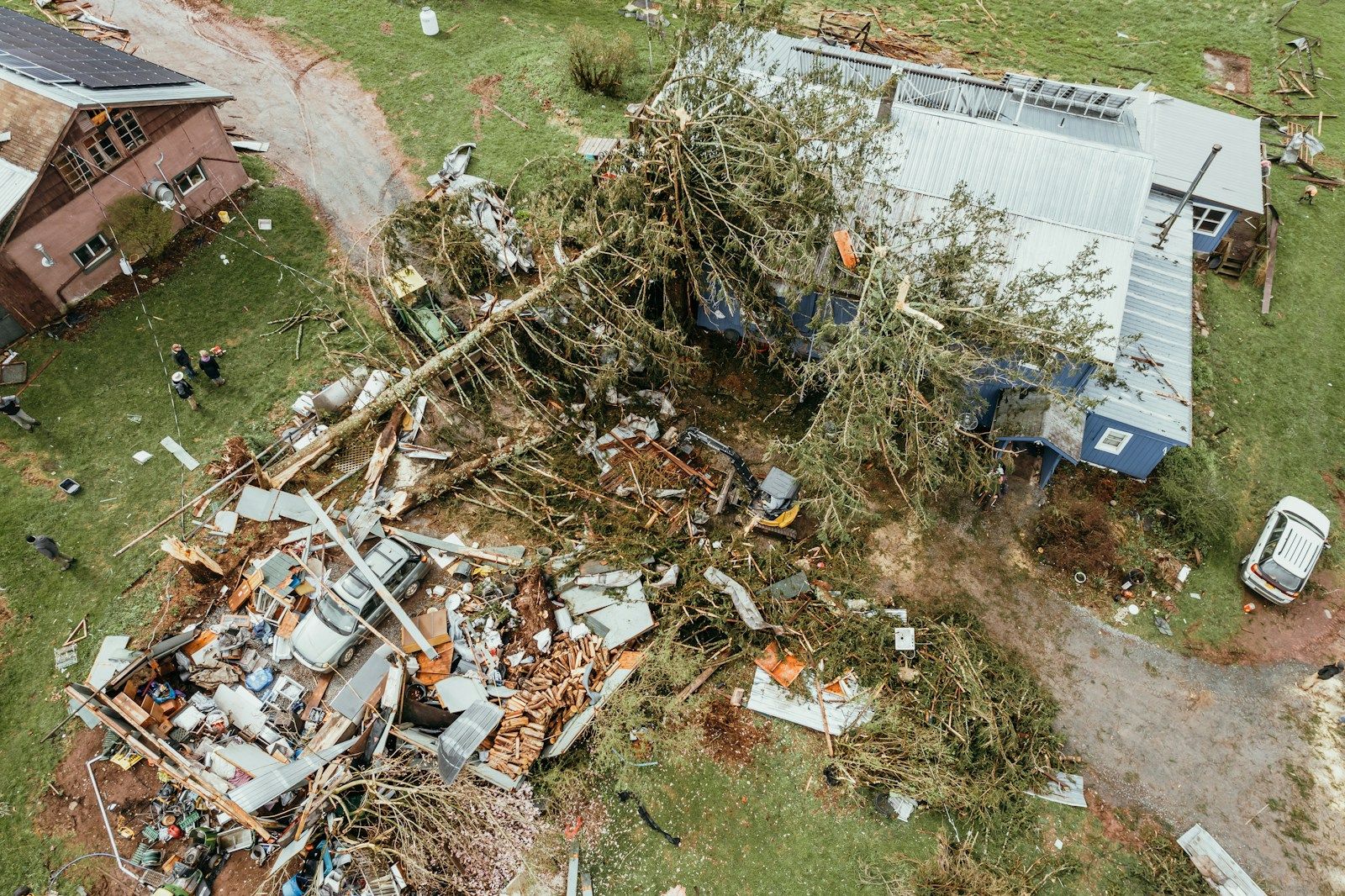
Short answer: Replacement cost pays what it costs to repair or replace the item with new materials, while actual cash value pays that amount minus depreciation. On a 15-year-old roof, the difference can be thousands of dollars. Many policies pay ACV first and release the held-back depreciation once the work is done.
The difference in one example
Replacement cost value (RCV) is the estimated cost to repair or replace damaged property with materials of similar kind and quality at current prices, without subtracting depreciation. Actual cash value (ACV) accounts for depreciation. In a simplified example, if replacing a damaged roof section costs $18,000 today and the estimate assigns $6,000 in depreciation, the ACV before the deductible is $12,000. The $6,000 is not automatically the amount an insurer owes later: the policy, eligible work, actual cost, limits, and claim settlement determine whether any withheld depreciation can be recovered.
That distinction answers a common confusion. RCV is not the home’s real-estate market value, and ACV is not what a buyer would pay for the whole house. A property claim values the damaged part under the wording in the policy. Land, neighborhood, and sale prices do not calculate a roof’s depreciation. The Insurance Information Institute describes RCV as the amount needed to repair or replace with similar materials without a depreciation deduction, and ACV as replacement cost less depreciation. North Carolina’s insurance department describes the same basic distinction and notes that an RCV claim may begin with an ACV payment before receipts are submitted for eligible repairs.
Use the example as arithmetic, not a prediction of a settlement. A real estimate might separate labor, removal, materials, code work, taxes, and undamaged areas. The adjuster may apply age and condition to individual line items instead of assigning one percentage to the whole project. A policy can also have special roof language, a separate deductible, a limit, or an exclusion that changes the result. Ask for the estimate in writing and make sure you can see the replacement-cost figure, depreciation, deductible, and net payment as separate entries.

How depreciation changes the payment
Depreciation is an adjustment for the age, use, condition, or obsolescence of property. It is not necessarily a fixed annual rate that applies identically to every item. A roof with one layer of shingles, a refrigerator, and a wood floor have different expected lives and different condition evidence. A claim estimate may list an item’s age, useful life, condition, and depreciation separately. If those inputs look wrong, ask the insurer to explain them and provide the records you have, such as installation invoices, maintenance records, product details, or dated photos.
Suppose a covered loss damages a roof and the estimate lists $18,000 as the replacement cost, $6,000 as depreciation, and a $2,000 deductible. On a simplified ACV settlement, the initial payment calculation could be $18,000 minus $6,000 minus $2,000, or $10,000, subject to the policy and any other adjustments. Under replacement-cost coverage, the insurer may first issue an ACV payment and hold back eligible depreciation. If qualifying repairs cost $17,000 and the policy allows recovery based on documented costs, the additional payment would not exceed the eligible amount actually spent, the recoverable depreciation, or the applicable limit. The deductible still applies; RCV does not refund it.
The arithmetic also shows why the word “replacement” does not mean an immediate check for the full new-roof estimate. A replacement-cost policy may settle in stages. The policyholder may need to complete the work, submit an invoice, and meet a deadline. North Carolina’s regulator explains the usual ACV-first and receipt process, while policy wording and state rules can differ. Do not assume a time period from a neighbor’s claim or a contractor’s experience. Read the loss-settlement condition and ask the insurer to state the due date and required proof for your claim.
Recoverable depreciation and holdback
When a claim estimate subtracts depreciation from an RCV amount, the withheld portion is often called recoverable depreciation or a holdback. It is potentially recoverable only if the contract allows it and the insured meets its conditions. The sequence commonly works like this: the insurer estimates the covered repair at replacement cost, subtracts depreciation and the deductible for an initial payment, then considers a later request after the covered work is completed and documented. The exact sequence, timing, and calculation are policy-specific.
Before work begins, ask what documents the insurer needs. It may request a signed contract, proof of completion, an itemized invoice, photos, or evidence of payment. Ask whether a deposit or partial completion supports any interim release, whether the contractor must use like-kind materials, and whether the final cost must match the insurer’s scope. Keep copies of every submission and note the date it was sent. If the insurer says a cost is not eligible, ask which policy term or estimate line controls instead of assuming the whole holdback is lost.
The deadline matters because a recoverable amount can be conditioned on finishing repairs within the time stated in the policy or an extension. Some states or claim circumstances may provide additional protections; do not generalize one state’s rule to every policyholder. If you anticipate a delay because of permits, material availability, or contractor scheduling, contact the insurer before a deadline and ask for a written extension decision. The issued policy and applicable state requirements—not a generic article—determine what applies.
Recoverable and non-recoverable depreciation
Recoverable depreciation is the amount that may be released if the insured satisfies the policy’s replacement-cost conditions. Non-recoverable depreciation is a deduction the policy does not reimburse. The distinction can arise because a policy settles a type of property at ACV, because the damaged item is subject to a special payment schedule, because replacement-cost coverage was not purchased, or because the actual cost does not support the full replacement estimate. Ask the adjuster to identify which category applies to each line item.
The labels on the estimate are not enough by themselves. A line called “depreciation” could refer to an amount that is conditionally recoverable or one that is final under the policy. Request a written breakdown that shows the replacement-cost amount, depreciation withheld, ACV, deductible, other adjustments, and maximum recoverable amount. If the estimate is silent, ask whether the loss is being handled under ACV or RCV and where that settlement basis appears in the policy. A clear answer helps you plan cash flow before you sign a repair contract.
Example: a 15-year-old roof
Imagine a storm damages an older roof. The contractor estimates $20,000 for a like-kind replacement. The insurer’s estimate includes $7,000 in depreciation and a $2,500 deductible. If the loss is covered and the estimate is accepted, the simplified ACV payment would be $10,500 before any other adjustments: $20,000 minus $7,000 minus $2,500. If the policy provides recoverable RCV and the homeowner completes eligible repairs for the estimated amount, up to $7,000 might later be considered, subject to the policy and documentation. The ultimate claim payment in this example would still be reduced by the deductible.
Change one fact and the answer changes. If the roof’s loss-settlement endorsement pays ACV only, the $7,000 may not be recoverable. If the repair costs $18,000 instead of $20,000, the insurer may calculate a later payment from the eligible incurred cost rather than pay unused estimate dollars. If the cause is excluded, the payment can be zero regardless of whether the policy lists RCV. If the actual scope includes code upgrades, the ordinance-or-law coverage and local rules may matter separately. This is why one homeowner’s final check is not a reliable forecast for another roof.
Roofs can have different settlement terms
Do not assume that “replacement cost on the dwelling” means every roof claim is paid at full replacement cost. Some policies or endorsements use an ACV settlement for a roof, a roof payment schedule, or different terms based on material, age, or condition. A claim can also involve a deductible specific to wind or hail. The North Carolina regulator cautions consumers to understand how a policy will pay and to check the contract. The declarations page may identify an endorsement, but the full wording is often in a separate form.
Look for phrases such as actual cash value, replacement cost, roof surfacing payment schedule, cosmetic damage exclusion, or matching limitations. These phrases do not have one universal meaning across insurers. Ask the company to provide the form number and edition that apply to your policy and to explain how the form affects the roof involved in the claim. If the roof is older, the guide to insurance and an old roof explains why age and condition can affect coverage and settlement. A hail loss may raise separate questions about visible damage, repair scope, and depreciation; see the hail damage guide.
Where to find the settlement method
Start with the declarations page, which summarizes coverages, limits, deductibles, and listed forms. It may show whether personal property is insured at replacement cost or ACV, but the declarations page may not fully explain roof settlement. Next, read the policy’s loss-settlement section and all attached endorsements. Search the document for “replacement cost,” “actual cash value,” “depreciation,” “roof,” and “loss settlement.” Keep the declarations and full forms together because the summary can point to conditions that appear elsewhere.
If you cannot tell which method applies, contact the insurer or agent and ask a specific question: “For a covered roof loss at this address, does the policy settle the roof at ACV or replacement cost, and is there a roof payment schedule or age-based limitation?” Ask for the answer and the relevant form in writing. If the policy has separate settlement bases for the dwelling and contents, ask about each one. The NAIC’s consumer explanation of homeowners and renters policy terms advises policyholders to review how property will be replaced and whether settlement is RCV or ACV.
The same review is useful before a loss. A home insurance policy’s dwelling limit is not the home’s sale price. Your homeowners coverage guide explains the difference between dwelling coverage, personal property, and other policy sections. When you do have a loss, compare the estimate with your contract and follow the claim filing steps. If a claim could affect your premium, the homeowners claim premium guide explains why the answer depends on location, claim history, and insurer practices.
How to review a claim estimate
Read the estimate one line at a time. Confirm the damaged property, measurements, material type, quantities, labor, removal, and repair method. For a roof, verify the number of slopes or squares and whether the estimate includes underlayment, flashing, ventilation, and disposal when those items are part of the agreed scope. This is not a reason to inflate quantities; it is a way to catch missing or incorrect work. If you find an error, send the corrected measurement or photo and ask for a revised estimate.
Check the age and condition assigned to each item. If the estimate says a roof was installed 15 years ago but it was replaced 8 years ago, provide the invoice or permit record. If you have no invoice, a dated inspection, prior listing, warranty, or contractor record may help establish a reasonable timeline. Do not alter a receipt, invent a date, or call unrelated wear storm damage. An accurate chronology protects your claim and makes it easier to explain which portion of the estimate you dispute.
Then compare the estimate with the declarations page and policy. Confirm the applicable deductible, whether a separate wind or hail deductible is listed, whether the item has an ACV-only provision, and whether the policy has a limit or exclusion. Ask the insurer to distinguish covered damage from maintenance or unrelated pre-existing conditions. If the insurer’s reason is unclear, request the explanation and the specific wording in writing. A contractor can describe repairs, but only the policy and claim facts determine insurance coverage.
Choosing between ACV and RCV before a loss
When comparing policies, look beyond the label and premium. Ask whether the dwelling, personal property, roof surfacing, and detached structures have different settlement methods. Check the deductible, limits, replacement-cost conditions, time limit for completing repairs, and whether the policy has a roof payment schedule. A lower premium can come with a higher deductible or ACV terms on certain property. There is no universal answer about which offer is best; the practical question is how much of a covered loss you could fund while repairs are arranged.
Create an inventory for belongings and keep receipts for major improvements. For the home, save roof replacement invoices, inspection reports, and records of repairs. These documents do not guarantee that an insurer will accept a particular estimate, but they make it easier to establish age, condition, and prior work. Keep digital copies in a place you can reach if the home is damaged. Review the policy at renewal and after a major renovation or purchase.
Practical questions to ask your insurer
Before buying coverage or accepting a claim calculation, ask:
- Is the damaged property settled at ACV or RCV?
- Does any roof or property endorsement change the settlement method?
- What depreciation is recoverable, and what proof is required?
- What is the deadline to complete repairs and submit the final invoice?
- Does the deductible apply before or after the depreciation calculation in this estimate?
- Are code upgrades, debris removal, or matching costs covered under a separate provision?
- Which policy form and edition govern the claim?
Write down the answers and save the forms or estimate that support them. If a deadline or coverage decision is disputed, contact your state insurance department for the state’s consumer assistance process. General explanations can help you ask better questions, but they do not replace the policy, a claim-specific review, or advice from a licensed professional.
Frequently asked questions
Replacement cost and ACV are ways a policy may value covered property. They do not answer whether the event is covered, whether an exclusion applies, how much the deductible is, or what the insured must do to receive a later payment. Read the contract, keep the estimate, and ask for the calculation in writing.
Frequently asked questions
Is replacement cost better than actual cash value?
Replacement cost can leave less depreciation for you to absorb after a covered loss, but it does not make every loss covered or remove your deductible. Compare the premium, limits, exclusions, roof wording, and your ability to pay the initial amount while repairs are pending.
Does actual cash value mean market value?
No. ACV in a property claim generally starts with the cost to repair or replace damaged property and accounts for depreciation. It is not the real-estate sale price of a home, which also reflects land, location, and market conditions.
Can I get recoverable depreciation before repairs?
Often the withheld amount is payable after qualifying repairs or replacement and proof of the incurred cost, but the policy and claim instructions control. Check any deadline, documentation rule, and maximum payment with the insurer in writing.
How do I know whether my roof is ACV or replacement cost?
Check the declarations page and the roof loss-settlement wording or endorsement. Some policies use different settlement methods for roofs than for other parts of the home, so ask the insurer to identify the form and explain the calculation for your specific roof.
Sources
- How is the settlement amount determined? — Insurance Information Institute
- Actual Cash Value vs. Replacement Cost Value — North Carolina Department of Insurance
- What's the Difference Between Actual Cash Value Coverage and Replacement Cost Coverage? — National Association of Insurance Commissioners
CoverClaro explains insurance. We do not sell insurance or give personal advice. Your policy and insurer determine your coverage.